Ctrl/

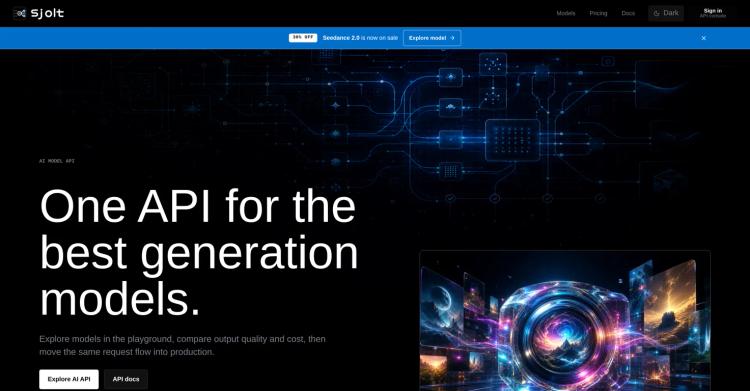
A unified API for accessing over 100 models across image, video, text, and audio functionalities.
Input:
Output:
Updated: Apr 21, 2026 Free + from $5
Description
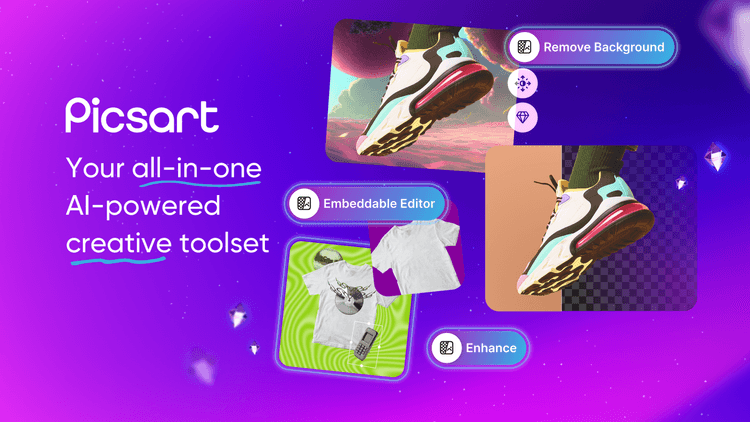
Picsart AI Hub is an API solution providing your team with API access to a wide array of production-ready models through Picsart Creative APIs. It allows for consistent workflows across different providers, utilizing the same endpoint shape, authentication, and request patterns, with provider switching achieved by modifying the model URN. For deployment, version pinning with AIR URNs ensures stable production outputs.
AI Hub is tailored for teams aiming for rapid progress without being restricted to a single model or managing multiple vendor-specific SDKs. It also scales from basic generation to broader image and video editing APIs within the same platform.
HIGHLIGHTS
- Compare models using the same API workflow.
- Pricing based on usage, including volume discounts.
- Change providers by updating the model URN, rather than the entire integration.
- Control at the project/application level to segregate evaluation, staging, and production environments.
- Eligible accounts receive 200 complimentary credits for model evaluation.
SUPPORTED GENERATION TYPES
- text2image
- image2image (prompt-based editing, inpainting, outpainting)
- text2video
- image2video
- text2text
- text2speech
- text2sound
AI Hub integrates Picsart's own creative services alongside models from other providers, allowing teams to combine generation and editing workflows (such as generating an image and then removing its background).
MAIN VENDORS AVAILABLE
AI Hub interfaces with a diverse set of providers. The catalog includes vendors such as:
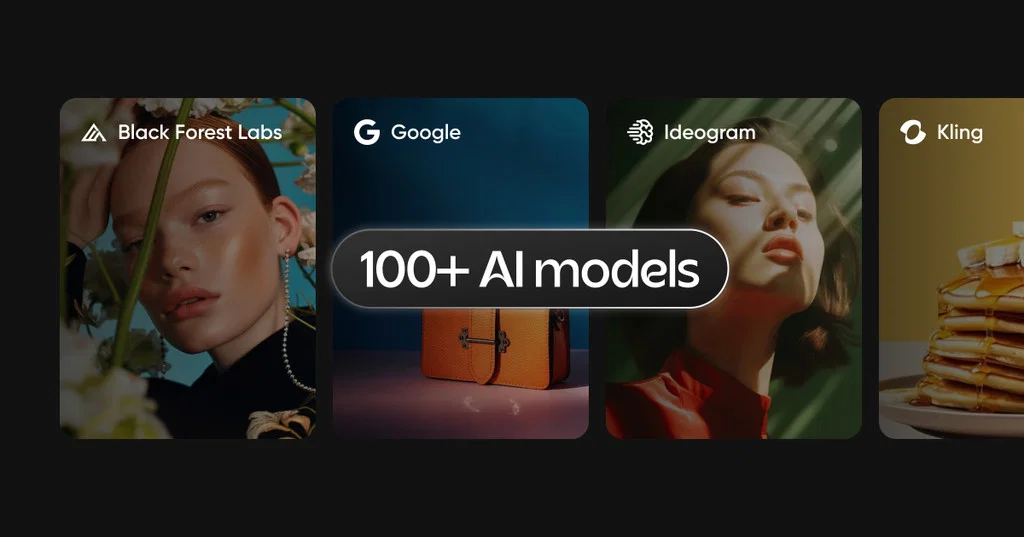
OpenAI, Google, Anthropic, Black Forest Labs, Flux.AI, Ideogram, Kling AI, Runway, Luma, MiniMax, Seedream, Seedance, Wan, xAI, ElevenLabs, Async, Hunyuan, Qwen, Reve, Ovi, Lightrick (LTX), and Picsart.
Popular model names people recognize
Image
- DALL‑E 3 (OpenAI)
- GPT Image 1, GPT Image 1.5, GPT Image 2.5 (OpenAI)
- FLUX Kontext Max, FLUX Kontext Pro (Black Forest Labs)
- Flux 2, Flux 2 Pro, Flux 2 Max (Flux.AI)
- Seedream 4, Seedream 4.5, Seedream 5.0 Lite (Seedream)
- Qwen Image 2.5 (Qwen)
- Gen4 (Runway, text-to-image)
Video
- Veo 3.1 and related variants (Google)
- Gen4.5 (Runway, text-to-video and image-to-video)
- Kling 3 (Kling AI, text-to-video and image-to-video)
- Ray 1.6 (Luma, image-to-video)
- Hailuo 02 (MiniMax, image-to-video)
- Wan 2.5 and Wan 2.6 (Wan, image-to-video)
- Grok Imagine Video (xAI, text-to-video and image-to-video)
Text and audio
- Claude Sonnet 4.5 and Claude Sonnet 4.6 (Anthropic, text-to-text)
- Gemini model family (Google, text-to-text)
- Eleven 3 (ElevenLabs, text-to-speech)
- Sound Effects 2 (ElevenLabs, text-to-sound)
- Flash 1 (Async, text-to-speech)
COMMON USE CASES
- Integrate generative features into a product with a single, stable setup across different media formats.
Assess model quality and speed by testing identical prompts and inputs across various providers.
- Maintain flexible costs as you scale with usage-based pricing.
- Prevent vendor lock-in by dynamically switching models via URNs without altering code.
- Expand from basic generation to full editing capabilities on the same platform as your workflows evolve.
WANT EVEN MORE?
- A single integration for many providers, allowing you to maintain a consistent workflow while selecting the best model for each task.
- Simplified model management: switch models by updating the model URN, and pin versions using AIR URNs when moving to production.
- Enhanced decision-making: compare outputs side by side using identical prompts and constraints before deployment.
- Designed for scalability and governance, with separate environments for evaluation, staging, and production at the project or application level.
- Enterprise readiness: AI Hub follows compliance signals such as SOC 2 Type II, SOC 3, ISO 27001, and GDPR support via the Trust Center.
AI Hub is tailored for teams aiming for rapid progress without being restricted to a single model or managing multiple vendor-specific SDKs. It also scales from basic generation to broader image and video editing APIs within the same platform.
HIGHLIGHTS
- Compare models using the same API workflow.
- Pricing based on usage, including volume discounts.
- Change providers by updating the model URN, rather than the entire integration.
- Control at the project/application level to segregate evaluation, staging, and production environments.
- Eligible accounts receive 200 complimentary credits for model evaluation.
SUPPORTED GENERATION TYPES
- text2image
- image2image (prompt-based editing, inpainting, outpainting)
- text2video
- image2video
- text2text
- text2speech
- text2sound
AI Hub integrates Picsart's own creative services alongside models from other providers, allowing teams to combine generation and editing workflows (such as generating an image and then removing its background).
MAIN VENDORS AVAILABLE
AI Hub interfaces with a diverse set of providers. The catalog includes vendors such as:
OpenAI, Google, Anthropic, Black Forest Labs, Flux.AI, Ideogram, Kling AI, Runway, Luma, MiniMax, Seedream, Seedance, Wan, xAI, ElevenLabs, Async, Hunyuan, Qwen, Reve, Ovi, Lightrick (LTX), and Picsart.
Popular model names people recognize
Image
- DALL‑E 3 (OpenAI)
- GPT Image 1, GPT Image 1.5, GPT Image 2.5 (OpenAI)
- FLUX Kontext Max, FLUX Kontext Pro (Black Forest Labs)
- Flux 2, Flux 2 Pro, Flux 2 Max (Flux.AI)
- Seedream 4, Seedream 4.5, Seedream 5.0 Lite (Seedream)
- Qwen Image 2.5 (Qwen)
- Gen4 (Runway, text-to-image)
Video
- Veo 3.1 and related variants (Google)
- Gen4.5 (Runway, text-to-video and image-to-video)
- Kling 3 (Kling AI, text-to-video and image-to-video)
- Ray 1.6 (Luma, image-to-video)
- Hailuo 02 (MiniMax, image-to-video)
- Wan 2.5 and Wan 2.6 (Wan, image-to-video)
- Grok Imagine Video (xAI, text-to-video and image-to-video)
Text and audio
- Claude Sonnet 4.5 and Claude Sonnet 4.6 (Anthropic, text-to-text)
- Gemini model family (Google, text-to-text)
- Eleven 3 (ElevenLabs, text-to-speech)
- Sound Effects 2 (ElevenLabs, text-to-sound)
- Flash 1 (Async, text-to-speech)
COMMON USE CASES
- Integrate generative features into a product with a single, stable setup across different media formats.
Assess model quality and speed by testing identical prompts and inputs across various providers.
- Maintain flexible costs as you scale with usage-based pricing.
- Prevent vendor lock-in by dynamically switching models via URNs without altering code.
- Expand from basic generation to full editing capabilities on the same platform as your workflows evolve.
WANT EVEN MORE?
- A single integration for many providers, allowing you to maintain a consistent workflow while selecting the best model for each task.
- Simplified model management: switch models by updating the model URN, and pin versions using AIR URNs when moving to production.
- Enhanced decision-making: compare outputs side by side using identical prompts and constraints before deployment.
- Designed for scalability and governance, with separate environments for evaluation, staging, and production at the project or application level.
- Enterprise readiness: AI Hub follows compliance signals such as SOC 2 Type II, SOC 3, ISO 27001, and GDPR support via the Trust Center.
Key Features
AI Image Generator
AI Video Generator
AI Speech Generation
AI Music Generation
Text To Video
Pricing Plans
Model
freemium
Packages
1 Package
Price Start From
$5
Payment Model
one-time
Model
freemium
Packages
1 Package
Price Start From
$5
Payment Model
one-time
Releases
First public release of AI Hub - APIs by Picsart.
Reviews
Pros & Cons
Pros
Access to over 100 models
Facilitates creative product creation
Simplified API integration
Cons
Lacks offline operation
Performance relies on provider
Limited model customization options