Ctrl/




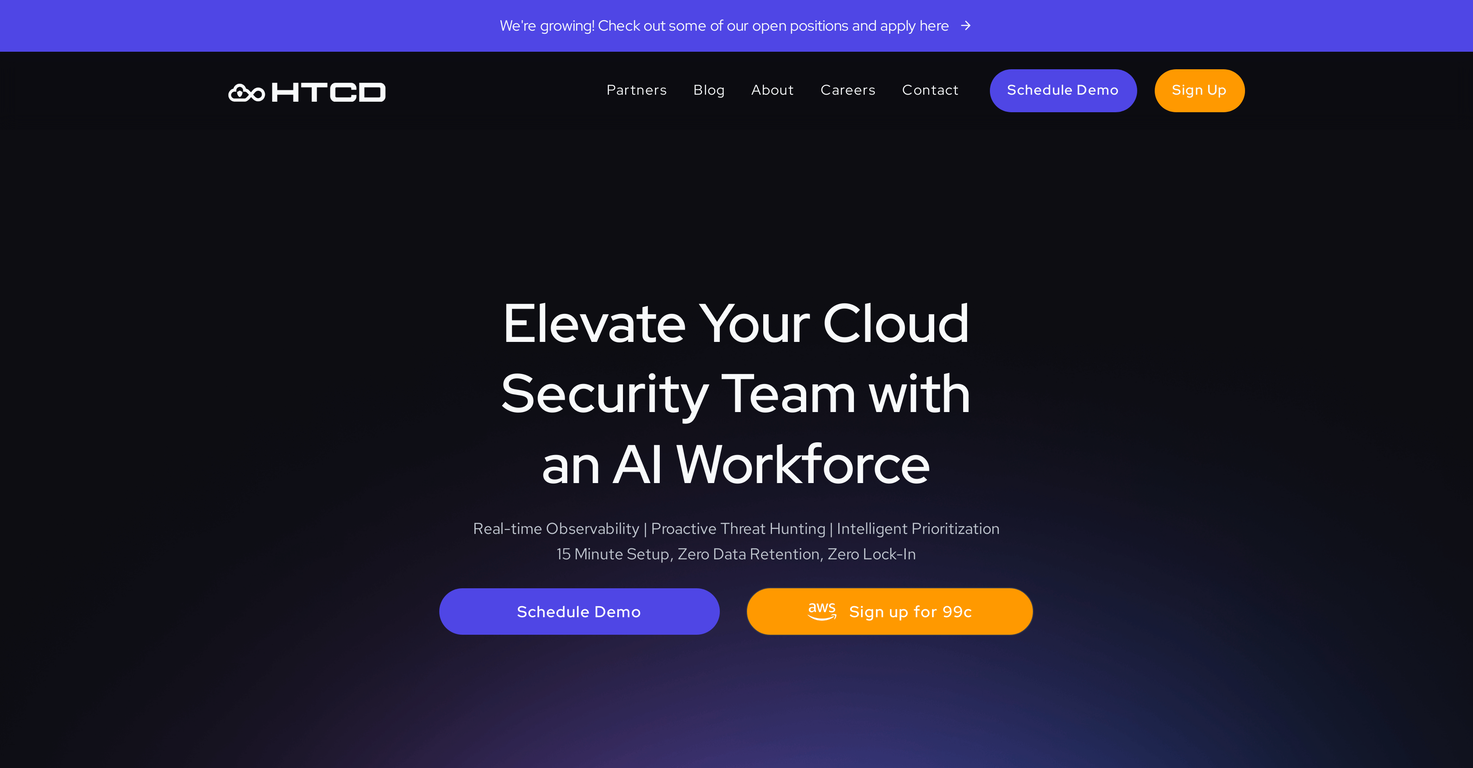
Enhance your cloud security team's capabilities using an AI-powered solution.
Updated: May 3, 2024 Contact for pricing
Description
HTCD (Human Trusted Cyber Defense) is an AI-driven cloud security tool designed to amplify the effectiveness of cloud security teams through real-time monitoring and proactive threat detection. It offers a unified dashboard to provide complete visibility across diverse cloud and data lake infrastructures. It includes more than 300 security and compliance rules and facilitates rapid integration of new data feeds. A key benefit of HTCD is the capacity to develop no-code threat detections in just minutes, thanks to its intuitive querying system that converts natural language questions into executable code. HTCD employs AI to streamline threat hunting processes via adaptable playbooks, associating insights with an investigative timeline and an actionable risk assessment. Its smart response functionality accelerates risk reduction by prioritizing security weaknesses according to their level of severity. Besides boosting operational performance, HTCD also supports data sovereignty and regulatory adherence by granting users total data governance. To better serve its user base, HTCD leverages threat intelligence to rank its results, displaying all potential problems on a single dashboard for easy navigation. HTCD is intended to assist clients in improving their cloud security defenses while preserving data governance, increasing analyst effectiveness, and lowering costs.
Large corporations, private equity firms, healthcare providers, and managed service providers utilize LakeFortress by HTCD.
Large corporations, private equity firms, healthcare providers, and managed service providers utilize LakeFortress by HTCD.
Pricing Plans
Model
no pricing
Packages
1 Package
Price Start From
Not specified
Payment Model
Not specified
Model
no pricing
Packages
1 Package
Price Start From
Not specified
Payment Model
Not specified
Releases
HTCD's first official release.
Reviews
Pros & Cons
Pros
Real-time observation capabilities
Proactive identification of threats
Unified control panel
Cons
Focus limited to cloud security
No coding detection constraints
Reliance on English-based queries