AIAXIO-AI Matched To Your Need

15,370 AI tools for 3,203 Tasks

OpenAI Codex logo

OpenAI Codex

5.3

15

0

Coding
An AI partner to help software engineering teams build better products faster.
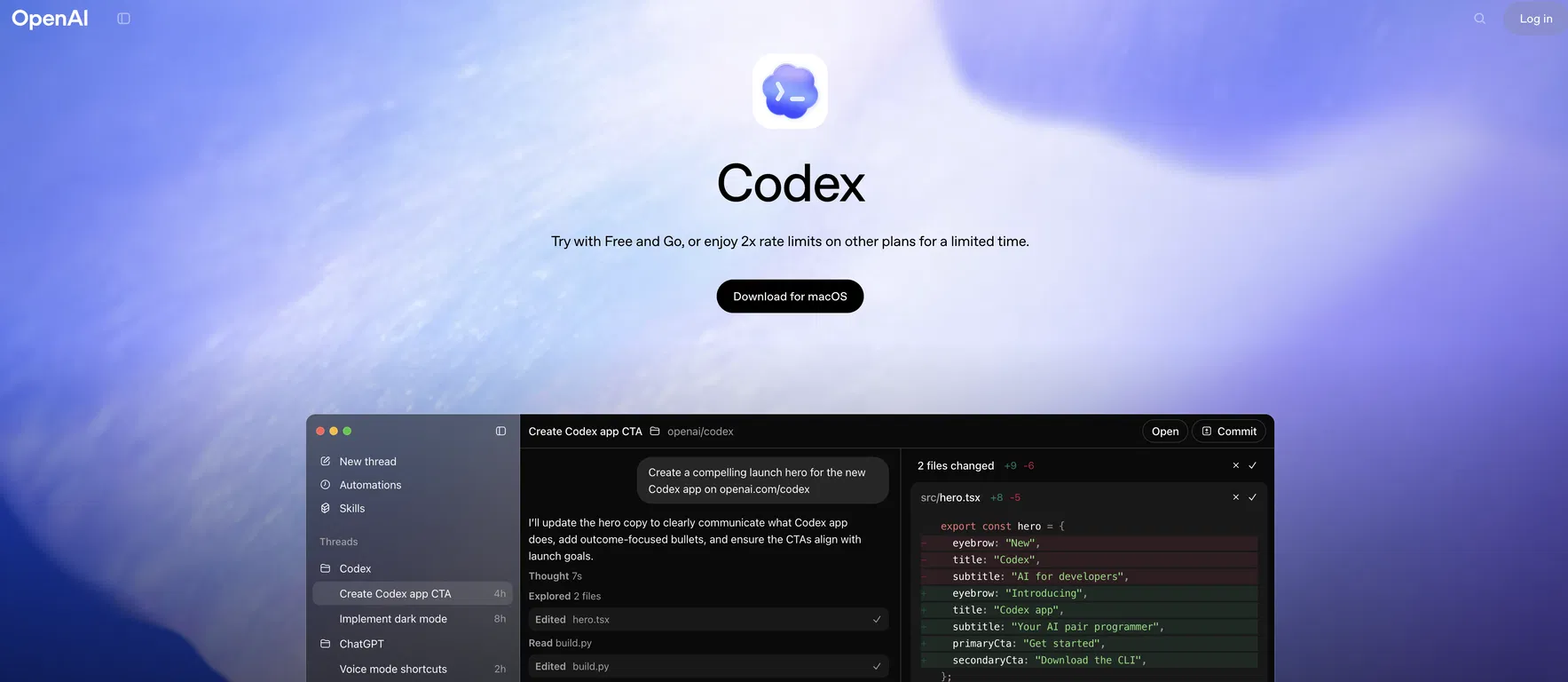
OpenAI Codex screenshot
Updated: Feb 5, 2026 Contact for pricing

Description

OpenAI Codex is a coding tool powered by artificial intelligence, designed to speed up software development. Unlike general language models, Codex is specifically designed for programming, allowing it to understand instructions and turn them into code across various languages. Codex is built on the foundation of models from GPT-3 and subsequent models specializing in software engineering, giving developers an intelligent assistant for writing, refactoring, debugging, and reviewing code. Codex can understand a developer’s intention and create code snippets in languages like Python, JavaScript, Go, Ruby, Swift, TypeScript, and more. It can also help users navigate complex codebases. It works in IDEs, terminals, and cloud environments, and integrates with platforms like ChatGPT and a dedicated application that serves as a command center for coordinating AI coding tools. Beyond code generation, Codex handles tasks like automated pull request generation, synthesizing tests, finding performance issues, and suggesting architectural improvements. Engineers can use these features to improve development cycles, reduce bottlenecks, and speed up delivery. Codex is available in higher-tier ChatGPT subscriptions and through standalone interfaces and CLI tools.

Pricing Plans

Model
no pricing
Packages
1 Package
Price Start From
Not specified
Payment Model
Not specified

Releases

GPT-5.3-Codex was integrated as the main model for the application, improving coding intelligence and agent capabilities across workflows. Improved agentic software engineering support with better performance on large projects, complex tasks, refactors, and reviews. Unified sign-in and context syncing between the application and ChatGPT account workflows. Run multiple Codex agents simultaneously across projects with isolated worktrees. Support for reusable skills that extend Codex beyond code generation (e.g., documentation, synthesis, workflows) Performance improvements and bug fixes across application workflows. Enhanced git tooling incorporated directly in the app interface.

Reviews

Pros & Cons

Pros

Turns natural language into functional code

Compatible with numerous programming languages.

Speeds up routine coding tasks

Cons

May create unnecessary or less-than-ideal code

Might not be completely accurate and needs review

Restricted to serverless environments

Q&A

New Released

New Released