


Description
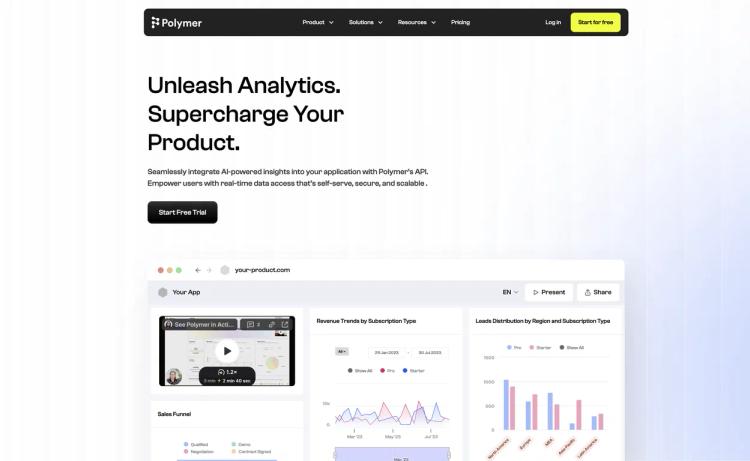
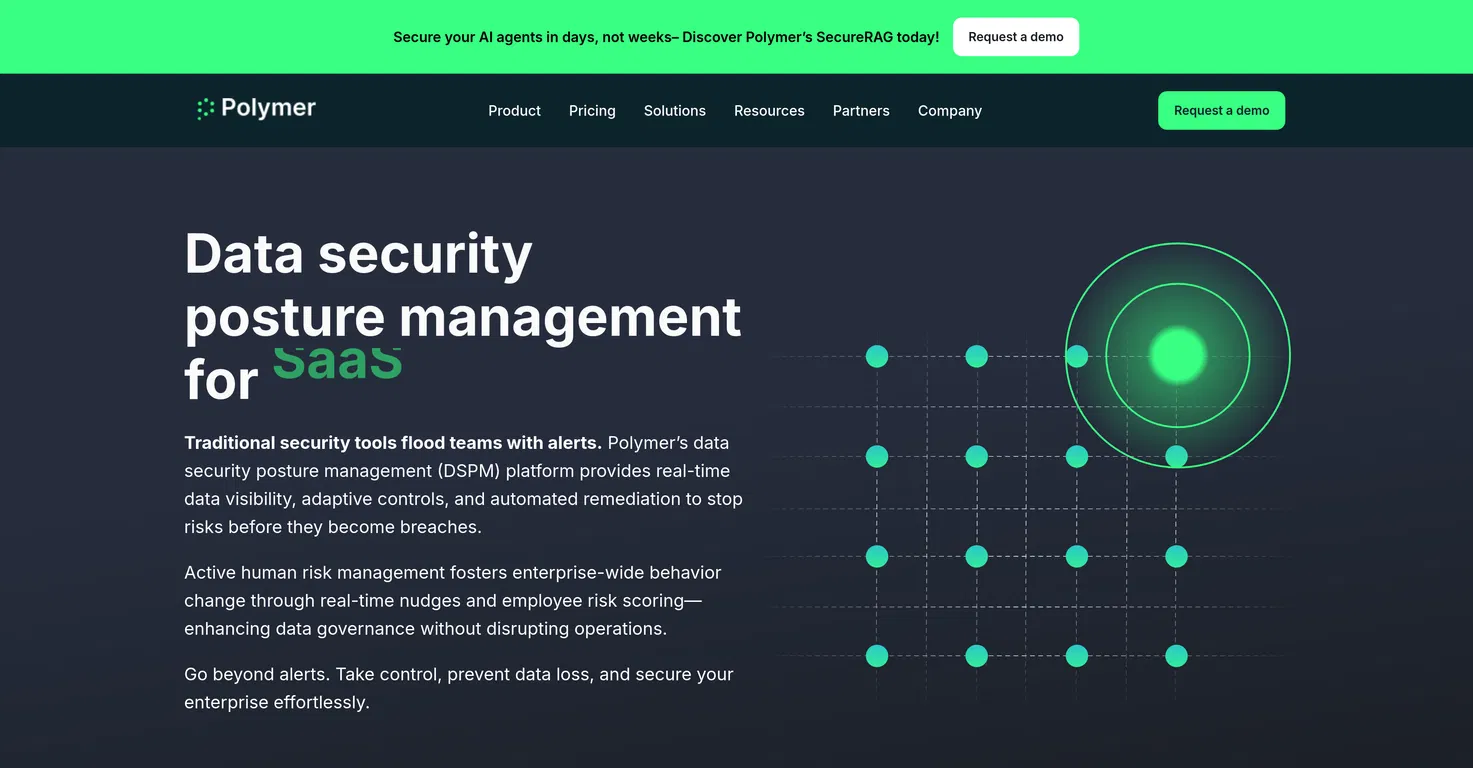
Polymer DSPM for AI is a data security posture management solution designed to prevent data breaches using risk management and ongoing monitoring.
This tool gives you real-time insight into your data, offering a range of adaptive data loss prevention (DLP) tools, and automated redaction to remove risks before they turn into breaches.
Designed for both flexibility and adaptability, Polymer DSPM uses a unique low-code design, making it suitable for secure operation in the age of AI.
This solution provides comprehensive data management across platforms such as Bitbucket, Box, GitHub, Google Drive, Microsoft OneDrive, Microsoft Teams, Notion, Salesforce, Slack, and Zendesk.
It highlights possible AI-related risks during software development and can quickly protect AI agents. Its SecureRAG feature scans various platforms for risks, delivering key insights for reducing data threats.
Pricing Plans
Releases
✅ Quantifies risk in real-time, per event and user.
✅ Monitors changes in behavior and remediation efforts.
✅ Can be integrated into SIEMs, UEBA, and enterprise risk simulations.
✅ Customizable to meet your governance, data sensitivity, and tolerance needs.
🧠 Using techniques similar to those used on Wall Street to model operational losses, the Polymer Risk Score brings a new level of precision to how companies manage human-related risk.
Transition from static alerts to predictive risk insights.
Reviews
Pros & Cons
Pros
Prevents data security incidents
Provides real-time risk management
Offers ongoing monitoring
Cons
Limited number of integrations
Low-code architecture may be complex
Risk of becoming desensitized to alerts