


Description
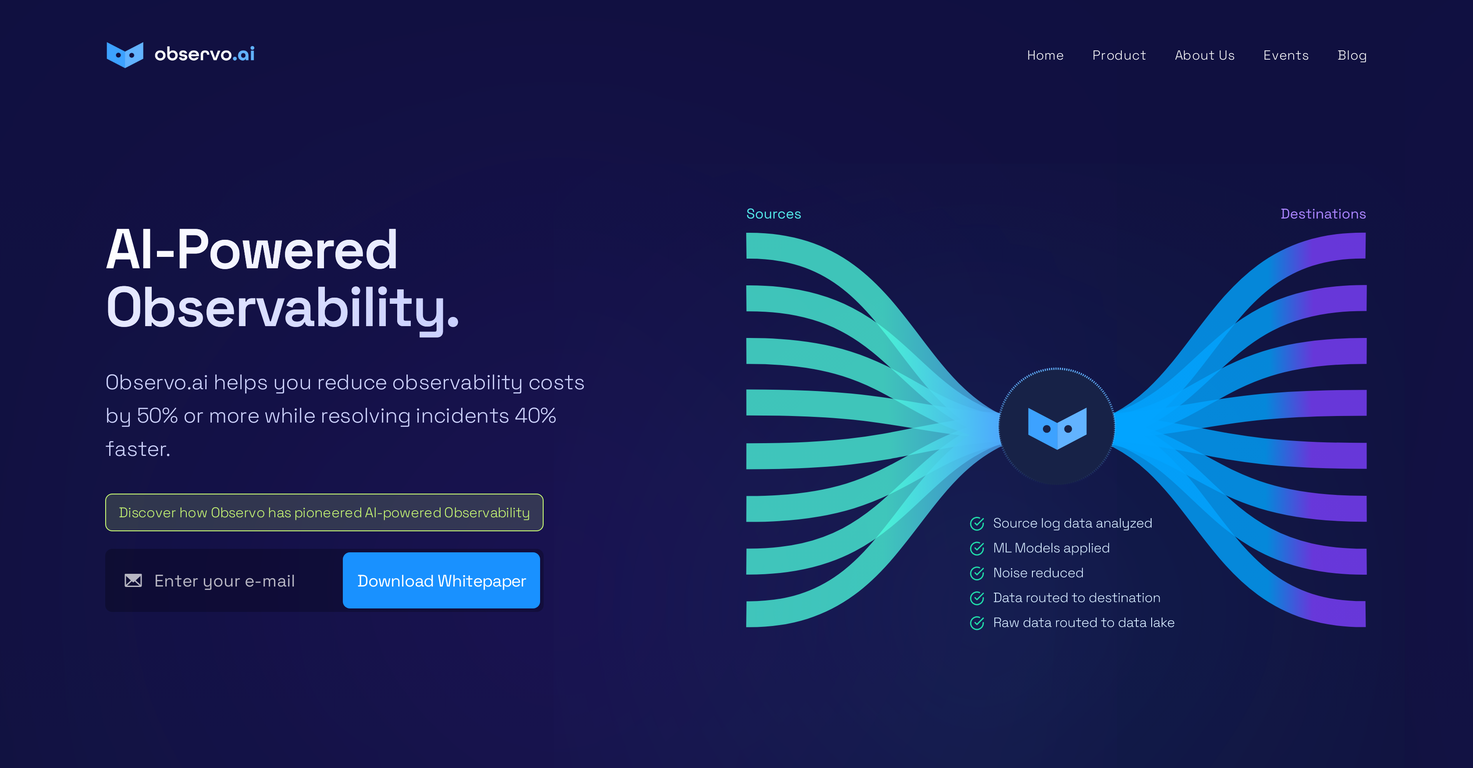
Observo is an AI-driven Observability Pipeline created for Security, IT, and DevOps data. In contrast to static, rules-based observability pipelines, Observo provides a dynamic solution that is continually learning and adjusting to user data.
Its core features involve data optimization and reduction, intelligent routing, anomaly detection, a searchable and affordable data lake, data enrichment, and the identification of sensitive data.
Regarding data optimization and reduction, it considerably lowers log volumes, resulting in significant savings in overall observability costs. The intelligent routing feature prevents vendor lock-in by appropriately directing data where it yields the greatest value.
Observo's anomaly detection decreases the mean time to resolution (MTTR) for incidents, and it delivers a searchable, economical data lake for versatile data retention.
Furthermore, the system enhances data with context for quicker searches and reduced alert fatigue, while also assisting in protecting personally identifiable information (PII) for enhanced compliance.
Observo empowers users with control and adaptability over their observability data through streamlined connections between sources and destinations, transformation implementation, and optimized data routing for improved business results.
Input from industry leaders indicates that Observo aids in lowering costs and improving incident detection and response capabilities.
Pricing Plans
Releases
Reviews
Pros & Cons
Pros
Dynamic learning solution
Data optimization & reduction
Significantly cuts log volumes
Cons
Depends on continual learning
Potential for smart routing errors
Anomaly detection false positives